Outdoor adventures are rarely as predictable as they look on a map. A short hike can turn into a long day because of bad weather, a wrong turn, an injury, or a delayed return. That’s why the tactical gear essentials for outdoor adventures should focus on reliability, versatility, and preparedness—not simply having the most gear.
The right setup doesn’t need to be huge or expensive. A well-organized tactical backpack with navigation equipment, reliable lighting, water, first-aid supplies, weather protection, communication tools, and basic repair gear can make a major difference when conditions change.
The National Park Service recommends carrying the 10 Essentials and tailoring them to the activity, terrain, weather, and duration of the trip.
This guide explains what belongs in a practical outdoor tactical setup, what to prioritize, and how to avoid turning your backpack into an unnecessarily heavy load.
What Is Tactical Outdoor Gear?
Tactical outdoor gear is equipment designed around durability, organization, accessibility, and practical performance in demanding environments.
It can include:
- Tactical backpacks
- Hiking clothing
- Navigation tools
- Headlamps and flashlights
- First-aid kits
- Hydration equipment
- Emergency shelters
- Communication devices
- Repair kits
- Gloves
- Outdoor footwear
- Weather protection
- Multi-tools
The important thing to understand is that tactical doesn’t automatically mean better for every adventure.
A large tactical pack may be excellent for carrying specialized equipment but unnecessary on a two-hour day hike. Likewise, a lightweight hiking pack may be more comfortable for long-distance trekking.
The best gear is determined by where you’re going, how long you’ll be there, the weather, the terrain, and how far you’ll be from help.
Quick Answer: What Tactical Gear Do You Need for Outdoor Adventures?
For most outdoor adventures, prioritize these gear categories:
- Tactical or hiking backpack
- Navigation equipment
- Headlamp or flashlight
- First-aid kit
- Water and water-treatment equipment
- Extra food
- Weather-appropriate clothing
- Emergency shelter
- Fire-starting equipment where appropriate and legal
- Multi-tool and repair supplies
- Sun and insect protection
- Emergency communication equipment
These categories closely align with the established “Ten Essentials” approach used by outdoor organizations. REI’s current system includes navigation, illumination, sun protection, first aid, tools and repair, fire, shelter, extra food, extra water, and extra clothing.
The exact equipment should change according to the adventure.
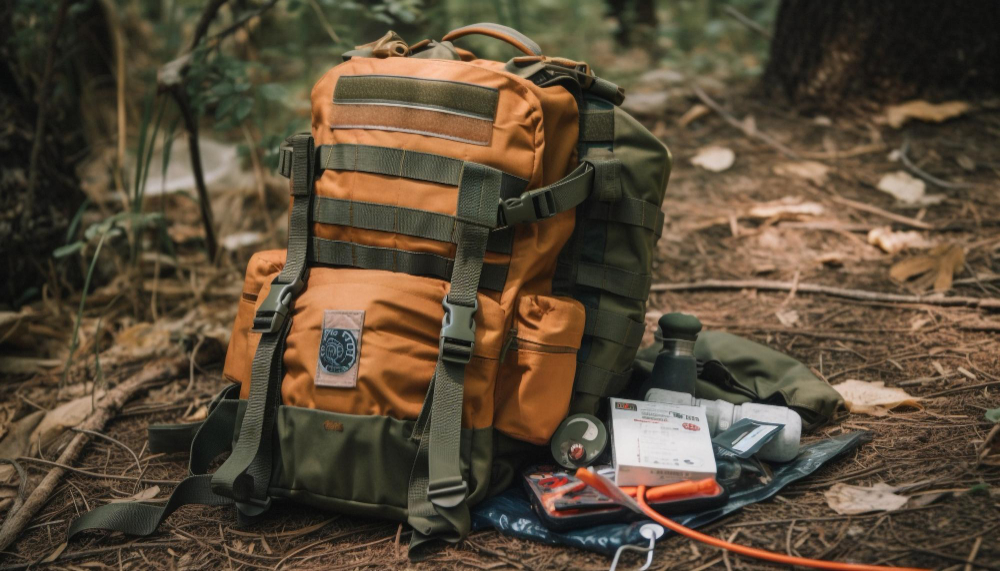
1. A Durable Tactical Outdoor Backpack
Your backpack is the foundation of your outdoor gear system.
It needs to carry your essentials comfortably while protecting them from weather, abrasion, and repeated use.
For day adventures, a 20–30L backpack can be a practical starting point. Longer trips may require substantially more capacity.
What to Look For
A quality outdoor tactical backpack should have:
- Durable fabric
- Comfortable shoulder straps
- Padded back panel
- Strong zippers
- Multiple compartments
- Hydration compatibility
- Compression straps
- External attachment points
- Weather-resistant construction
- Reinforced stress points
MOLLE/PALS webbing can be useful when you want to add compatible pouches, but don’t cover your backpack with accessories simply because you can.
Every pouch adds weight.
Every accessory takes up space.
Build your pack around the equipment you actually use.
2. Navigation Equipment
Navigation is one of the most important outdoor skills.
Your smartphone may provide GPS navigation, but it shouldn’t necessarily be your only navigation system.
The National Park Service recommends carrying appropriate navigation tools and knowing how to use a map, compass, or GPS before heading out.
A practical navigation setup can include:
- Topographic or local map
- Baseplate compass
- GPS device or smartphone
- Offline maps
- Backup battery
- Personal locator beacon or satellite communicator for remote trips
Why Carry a Physical Map?
Electronic navigation depends on:
- Battery power
- Device functionality
- Software
- GPS reception
- Your ability to operate the device
A physical map and compass provide an independent backup.
But there’s an important rule:
Don’t carry a compass without learning how to use it.
Practice navigation before you need it.
3. Headlamp or Tactical Flashlight
Darkness changes everything.
A trail that’s easy to follow in daylight can become difficult to navigate after sunset.
That’s why illumination is a core part of the Ten Essentials system. REI specifically recommends a headlamp because it keeps both hands available for tasks such as cooking, climbing, or using trekking poles.
Headlamp vs. Flashlight
Headlamp advantages:
- Hands-free operation
- Excellent for setting up camp
- Useful while hiking
- Convenient for repairs
Flashlight advantages:
- Easy to direct
- Useful as a secondary light
- Often more compact
- Can provide strong focused illumination
For longer adventures, carrying a primary headlamp plus a backup light can provide additional redundancy.
Don’t forget spare batteries or a charged backup power source.
4. First-Aid Kit
A first-aid kit is essential outdoor equipment.
The contents should match the trip rather than simply being based on the size of the kit.
A basic hiking kit might include:
- Adhesive bandages
- Gauze
- Medical tape
- Antiseptic supplies
- Nitrile gloves
- Blister treatment
- Tweezers
- Scissors
- Elastic wrap
- Personal medications
REI recommends tailoring first-aid supplies to the length and nature of the trip and specifically highlights blister care, gauze, tape, disinfecting ointment, gloves, and other basic supplies.
Don’t Forget Foot Care
Blisters can turn an enjoyable hike into a miserable one.
Consider carrying:
- Blister patches
- Moleskin or equivalent blister-care material
- Extra socks
- Foot lubricant where appropriate
The National Park Service specifically lists blister care and extra socks among useful hiking supplies.
And remember:
A first-aid kit is only as useful as your ability to use it.
Consider taking a recognized first-aid course before heading into remote terrain.
5. Hydration and Water Treatment
Water is one of the most important things you carry outdoors.
How much you need depends on:
- Temperature
- Humidity
- Elevation
- Exercise intensity
- Trip duration
- Access to water
- Your individual needs
For a day hike, you might use a hydration reservoir or water bottles.
For remote adventures, consider adding a water-treatment method such as an appropriate filter or purification system.
The National Park Service recommends planning water needs carefully and considering filtration or purification equipment when appropriate.
A Practical Water Strategy
Think in three layers:
Carry: Water you’ll need during the activity.
Treat: Equipment for making appropriate natural water sources safer when necessary.
Reserve: Additional capacity for unexpected delays.
Don’t assume every stream, lake, or spring is safe to drink from simply because the water looks clean.
6. Extra Food and High-Energy Snacks
Food provides more than comfort.
It gives you energy and provides an additional buffer if your trip takes longer than expected.
Good outdoor foods are:
- Compact
- Shelf-stable
- Easy to eat
- Calorie-dense
- Familiar
- Resistant to temperature changes
Examples include:
- Energy bars
- Nuts
- Trail mix
- Dried fruit
- Jerky
- Shelf-stable meals
REI recommends carrying extra food beyond the minimum expected amount and suggests easy-to-carry options such as bars, nuts, dried fruit, and jerky.
For remote or multi-day trips, increase your food reserve accordingly.
7. Weather-Appropriate Clothing
Your clothing is part of your survival system.
A sunny morning doesn’t guarantee a sunny afternoon.
The National Park Service recommends checking weather conditions, carrying appropriate rain protection, and being prepared for changing conditions.
Depending on your environment, consider:
- Moisture-wicking base layer
- Insulating mid-layer
- Rain jacket
- Wind shell
- Extra socks
- Warm hat
- Gloves
- Sun hat
- Durable outdoor pants
Layer Instead of Relying on One Heavy Jacket
Layering allows you to adjust to changing conditions.
You can remove a layer when you’re warm and add one when temperatures fall.
For cold-weather adventures, proper insulation becomes particularly important.
8. Emergency Shelter
A shelter doesn’t have to mean carrying a full tent on every day hike.
An emergency shelter can be surprisingly compact.
Options include:
- Emergency bivy
- Emergency blanket
- Lightweight tarp
- Compact shelter system
REI recommends carrying emergency shelter even when you’re not planning to spend the night outdoors, because an injury, navigation error, or weather problem can unexpectedly extend your trip.
This is one of the most important mindset changes in outdoor preparedness:
Pack for the possibility of delay, not just the planned schedule.
9. Fire-Starting Equipment
Fire can provide heat and, in appropriate circumstances, support cooking and other emergency needs.
A basic fire-starting system may include:
- Reliable lighter
- Waterproof matches
- Appropriate tinder
- Fire starter
REI includes fire-starting equipment in its Ten Essentials system and notes that waterproof matches or reliable lighters are useful choices.
However, fire isn’t appropriate everywhere.
Before using a fire starter or building a fire, check local regulations, fire restrictions, and land-management rules. In many areas, open fires may be prohibited because of wildfire risk.
Preparedness also means knowing when not to use a tool.
10. Multi-Tool and Gear Repair Kit
Outdoor equipment eventually experiences wear.
A small repair kit can solve minor problems before they become major ones.
Consider carrying:
- Compact multitool
- Duct tape
- Repair tape
- Zip ties
- Cordage
- Safety pins
- Small patches
- Spare equipment-specific parts
REI specifically recommends combining a knife or multitool with a gear repair kit and lists items such as duct tape, cordage, fabric repair tape, and zip ties.
For longer adventures, customize the repair kit around your equipment.
For example, if you’re carrying trekking poles, a tent, stove, sleeping pad, or water filter, consider the failure points of those specific items.
11. Sun Protection
Sun exposure can become a serious issue during long outdoor activities.
Your tactical outdoor setup should include appropriate sun protection such as:
- Sunglasses
- Sunscreen
- Sun hat
- Long-sleeve sun-protective clothing
- SPF lip protection
REI includes sun protection as one of the Ten Essential systems, including sunglasses, protective clothing, and sunscreen.
Don’t assume cloudy weather eliminates the need for protection.
Your exposure depends on the conditions, elevation, terrain, duration, and clothing.
12. Insect Protection
Insects can turn an otherwise excellent outdoor adventure into an uncomfortable experience.
Depending on your location and season, consider:
- Insect repellent
- Long sleeves
- Long pants
- Head net
- Permethrin-treated clothing where appropriate and used according to product directions
The National Park Service lists insect repellent among additional equipment that may be appropriate depending on the environment.
Research the local insect and disease risks before your trip rather than relying on a generic gear list.
13. Communication and Emergency Signaling
Your phone is useful, but it isn’t a complete emergency communication system.
In remote areas, cellular coverage may be unreliable or unavailable.
For higher-risk or remote adventures, consider:
- Whistle
- Signal mirror
- Satellite communicator
- Personal locator beacon
- Backup battery
- Emergency contact information
The NPS specifically notes that some backcountry areas lack cell service and recommends considering a personal locator beacon where appropriate.
A whistle is particularly simple.
It weighs very little and can help attract attention if you’re separated from your group or unable to communicate normally.
14. Tactical Outdoor Footwear
Your footwear may be more important than your backpack.
Poor footwear can create:
- Blisters
- Hot spots
- Foot fatigue
- Reduced traction
- Discomfort on uneven terrain
The right choice depends heavily on the route.
For some maintained trails, trail-running shoes may be appropriate.
For rougher terrain, hiking shoes or boots may provide advantages.
The NPS recommends sturdy footwear appropriate to the walking surface and activity rather than assuming every adventure requires the same type of shoe.
Don’t Wear Brand-New Boots on a Long Adventure
Break them in first.
Your feet should tell you whether the footwear works before the trail does.
15. Tactical Gloves
Gloves can provide protection from:
- Rough surfaces
- Cold
- Thorns
- Dirt
- Rope
- Tools
- Outdoor work
Choose gloves according to the activity.
For hiking, dexterity and comfort may matter more than heavy protection.
For technical outdoor work, you may need more specialized protection.
Don’t wear gloves that interfere with your ability to safely operate your equipment.
16. Trekking Poles
Trekking poles aren’t essential for every adventure, but they can be useful on steep, uneven, or extended routes.
They can provide:
- Additional balance
- Support on descents
- Help crossing uneven terrain
- Reduced strain for some hikers
The NPS lists trekking poles among optional outdoor equipment depending on the trip.
They’re particularly worth considering when the terrain is challenging or when you’re carrying a heavier pack.
17. Personal Hygiene and Waste Management
Outdoor preparedness includes leaving the environment in good condition.
Consider carrying:
- Toilet paper
- Hand sanitizer
- Small waste bags
- Personal hygiene products
- Tissues or wipes
Some national parks specifically expand the Ten Essentials with toiletries and waste considerations because hygiene and responsible waste management are easily overlooked.
Leave no trace should be part of your gear philosophy.
How to Build a Tactical Outdoor Gear Kit
You don’t need to buy everything at once.
A smarter approach is to build your kit in stages.
Level 1: Day-Hike Essentials
Start with:
- Backpack
- Water
- Food
- Navigation
- Headlamp
- First-aid kit
- Weather layer
- Sun protection
- Emergency shelter
- Multitool/repair supplies
This covers the fundamentals.
Level 2: Extended Day Adventure
Add:
- More water capacity
- Water treatment
- Additional food
- Spare clothing
- Communication device
- More comprehensive repair supplies
- Trekking poles
- Insect protection
Level 3: Overnight Adventure
Now consider:
- Larger backpack
- Tent or shelter
- Sleeping bag
- Sleeping pad
- Stove and fuel
- Additional food
- Larger water capacity
- More robust first aid
- More extensive repair equipment
The NPS recommends additional equipment such as a supported backpack, tent, sleeping system, stove, fuel, extra food, and repair equipment for overnight trips.
How to Avoid Overpacking
One of the biggest outdoor gear mistakes is assuming more equipment automatically means more safety.
It doesn’t.
Every extra item adds:
- Weight
- Bulk
- Organization requirements
- Potential distractions
Instead, evaluate every item using three questions:
1. What problem does this solve?
If you don’t have a clear answer, reconsider it.
2. How likely am I to need it?
A highly specialized tool may be unnecessary on a short, well-traveled trail.
3. Can another item perform the same function?
A multitool may replace several separate tools.
A smartphone may provide GPS, camera, communication, and information—but it shouldn’t necessarily replace every backup system.
Redundancy matters most for critical functions.
Tactical Gear vs. Traditional Hiking Gear
Tactical and traditional outdoor gear often overlap.
Both may prioritize:
- Durability
- Organization
- Weather resistance
- Comfort
- Weight efficiency
- Reliability
The major difference is often design philosophy.
Tactical Gear
Usually emphasizes:
- Modularity
- External attachment systems
- Rugged construction
- Accessibility
- Equipment organization
Hiking Gear
Often emphasizes:
- Low weight
- Ergonomics
- Ventilation
- Efficient packing
- Long-distance comfort
Neither is universally better.
For a long-distance trek, an ultralight hiking backpack may outperform a heavy tactical pack.
For a gear-intensive outdoor activity, tactical modularity may be more valuable.
Choose based on the mission, not the label.
How to Prepare Your Gear Before an Outdoor Adventure
Buying equipment isn’t enough.
Test it before you need it.
The NPS recommends checking equipment to make sure it works and learning how to use it before heading out.
Before your trip:
Check Your Backpack
Inspect:
- Straps
- Buckles
- Zippers
- Stitching
- Attachment points
Test Your Electronics
Check:
- Phone
- GPS
- Headlamp
- Power bank
- Satellite communicator
Check Medical Supplies
Replace expired or damaged supplies.
Test Your Clothing
Make sure layers fit comfortably and don’t restrict movement.
Practice Navigation
Don’t wait until you’re lost to learn how your compass or GPS works.
Test Your Water System
If you’re carrying a filter or purification system, understand its operation before entering the backcountry.
Outdoor Adventure Gear Checklist
Use this as a starting point and customize it for your trip:
- Tactical or hiking backpack
- Map
- Compass
- GPS/offline navigation
- Headlamp
- Backup light
- Extra batteries/power
- First-aid kit
- Blister treatment
- Water bottles or hydration reservoir
- Water-treatment system
- Extra food
- Weather-appropriate clothing
- Rain protection
- Emergency shelter
- Sun protection
- Insect protection
- Multitool
- Gear repair supplies
- Fire-starting equipment where permitted
- Whistle
- Communication device
- Personal medications
- Appropriate footwear
- Extra socks
- Hygiene supplies
- Waste bags
This list is based on the broader Ten Essentials framework and should be adapted to your destination, weather, terrain, activity, and trip duration.
Common Tactical Gear Mistakes to Avoid
Buying Too Much Gear
Start with the essentials.
You’ll learn what you actually need through experience.
Ignoring Weight
A backpack that feels comfortable empty can become uncomfortable when loaded.
NPS guidance specifically encourages hikers to consider how much equipment, food, and water they can comfortably carry.
Depending Entirely on Your Phone
Your phone is useful, but it isn’t a substitute for all emergency equipment. The NPS explicitly warns that cellular service and battery life can’t always be relied upon outdoors.
Ignoring Weather
Check the forecast before leaving and understand how quickly conditions can change.
Using Unfamiliar Gear
A piece of equipment you’ve never tested isn’t reliable equipment.
Forgetting to Tell Someone Your Plan
For outdoor adventures, especially remote ones, share your route, destination, expected return time, and relevant details with a trusted person.
The NPS recommends sharing a trip plan and checking in after returning.
Frequently Asked Questions
What tactical gear is essential for hiking?
The most important categories are navigation, lighting, first aid, water, food, shelter, weather protection, tools, and communication.
These align closely with the Ten Essentials framework used by the NPS and REI.
Is a tactical backpack good for hiking?
Yes, but it depends on the hike.
Tactical backpacks can offer excellent durability and modularity. However, some are heavier than hiking-specific packs.
For long-distance hiking, prioritize comfort and weight over tactical appearance.
How much water should I carry hiking?
It depends on the temperature, terrain, duration, individual needs, and access to reliable water sources.
Hot conditions and strenuous activity generally require more careful hydration planning. The NPS recommends planning water requirements around the conditions and carrying treatment equipment when appropriate.
Do I need a first-aid kit on a short hike?
Yes, carrying at least a basic first-aid kit is a sensible part of outdoor preparedness. The Ten Essentials framework includes first aid even for day hikes.
Do I need a GPS if I have a smartphone?
Not necessarily, but you should have a backup navigation method for trips where getting lost could have serious consequences.
A physical map and compass provide an independent backup, and you should know how to use them.
What should I carry on an overnight tactical camping trip?
In addition to your normal essentials, you’ll generally need an appropriate backpack, shelter, sleeping system, cooking equipment, fuel, additional food and water capacity, and more extensive repair supplies.
Final Thoughts: Build Your Outdoor Gear Around the Adventure
The best tactical gear essentials for outdoor adventures aren’t necessarily the most expensive products or the equipment with the most features.
They’re the items that help you navigate, stay hydrated, stay warm and dry, treat injuries, communicate, handle unexpected delays, and return safely.
Start with the fundamentals.
Build your system around the Ten Essentials. Then adapt it to your specific environment, activity, weather, terrain, and trip duration. The National Park Service and REI both emphasize that outdoor gear should be customized rather than treated as a one-size-fits-all list.
For a short day hike, you may need little more than a lightweight pack, water, food, navigation, first aid, lighting, weather protection, and emergency supplies.
For a remote overnight adventure, your requirements become much greater.
The smartest outdoor adventurer isn’t the person carrying the biggest backpack.
It’s the person who plans carefully, understands their equipment, knows their limits, and carries the right gear for the conditions.
Before your next adventure, check your route, review the weather, tell someone your plans, test your equipment, and pack for the possibility that the trip won’t go exactly according to schedule.