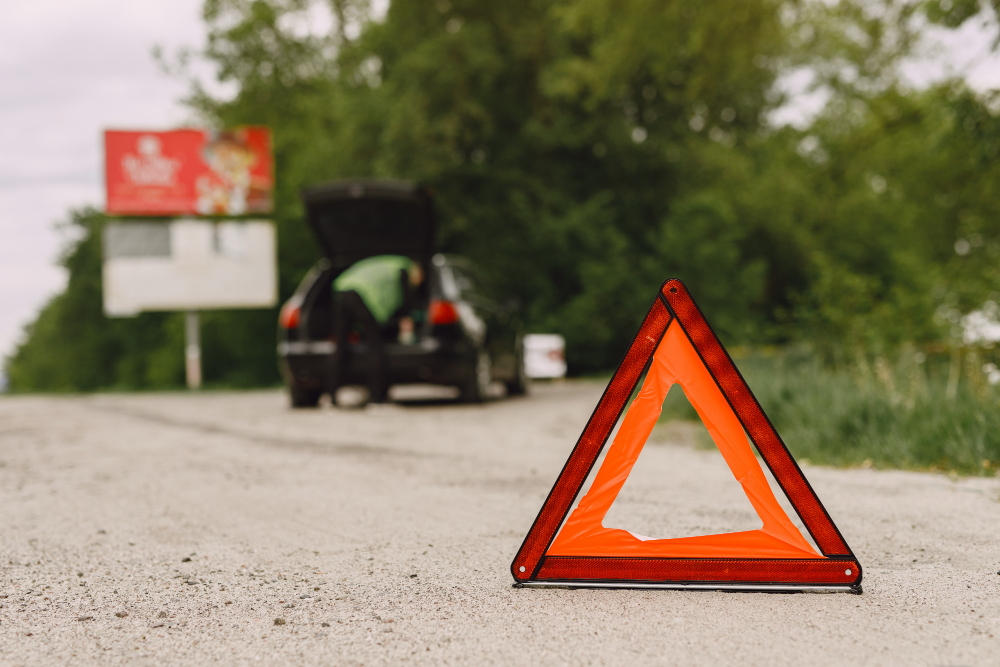
A vehicle can become a lifeline—or a serious problem—when something goes wrong far from home. A flat tire, dead battery, severe weather, accident, mechanical breakdown, or unexpected road closure can leave you waiting for assistance for hours. Keeping the right car emergency kit essentials in your vehicle can help you stay safer, communicate your situation, and handle minor problems while waiting for professional assistance.
You don’t need to fill your trunk with dozens of expensive gadgets. A practical vehicle emergency kit should focus on visibility, communication, first aid, basic repairs, warmth, water, food, and vehicle-specific equipment.
This guide covers what to keep in your car, how to organize it, seasonal additions, and the common items drivers often forget.
What Should Be in a Car Emergency Kit?
A basic car emergency kit should include a first-aid kit, flashlight, reflective warning equipment, jumper cables or a suitable jump starter, tire-inflation equipment, a spare tire or appropriate tire-repair solution, basic tools, phone charging equipment, water, shelf-stable snacks, work gloves, emergency blankets, and important vehicle information.
Your exact kit should depend on your vehicle, climate, driving habits, road conditions, and the distances you regularly travel.
Car Emergency Kit Essentials Checklist
Here’s a quick overview of the most important categories:
- First-aid kit
- Flashlight or headlamp
- Spare batteries
- Reflective vest
- Warning triangle or equivalent visibility equipment
- Jumper cables or jump starter
- Tire pressure gauge
- Portable tire inflator
- Spare tire and necessary equipment
- Vehicle jack and lug wrench
- Basic tool kit
- Work gloves
- Phone charger
- Power bank
- Water
- Shelf-stable snacks
- Emergency blanket
- Rain protection
- Basic hygiene supplies
- Emergency contact information
- Vehicle documents
- Emergency cash
1. First-Aid Kit
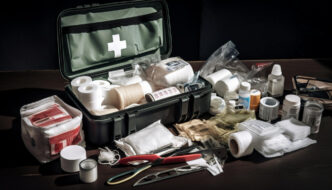
A first-aid kit is one of the most useful items to keep in your vehicle.
It can help with minor cuts, scrapes, blisters, and other basic injuries while you wait for professional medical assistance.
Consider including:
- Adhesive bandages
- Sterile gauze
- Medical tape
- Antiseptic wipes
- Disposable gloves
- Small scissors
- Tweezers
- Elastic bandage
- Cold pack
- Basic wound dressings
You can purchase a ready-made automotive first-aid kit or assemble your own.
Keep personal medications separate and stored according to their required conditions.
A vehicle first-aid kit is not intended to replace professional medical care.
2. Flashlight or Headlamp
A breakdown at night can become much more dangerous simply because other drivers may have difficulty seeing you.
Keep a reliable flashlight in your vehicle.
A headlamp is another excellent option because it leaves both hands free.
Include:
- LED flashlight
- Headlamp
- Spare batteries
- Backup light
Check batteries periodically.
Don’t rely exclusively on your phone’s flashlight. Your phone may be needed for emergency communication, navigation, or contacting roadside assistance.
3. Reflective Safety Equipment
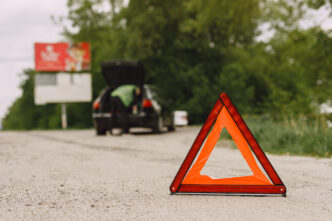
Visibility is one of the biggest priorities during a roadside breakdown.
Consider keeping:
- Reflective safety vest
- Warning triangle
- Roadside visibility equipment
- Reflective tape
If your vehicle becomes disabled, your primary goal should be getting yourself and passengers to a safer location away from traffic when possible.
Use warning equipment according to local road-safety requirements and never place yourself in a dangerous position simply to deploy a warning device.
4. Jumper Cables or a Portable Jump Starter
A dead battery is one of the most common reasons a vehicle may fail to start.
Keep either:
- Quality jumper cables
- A compatible portable jump starter
A jump starter can be particularly useful when another vehicle is not available.
If you use a jump starter, learn how to connect it correctly before you need it.
Follow the vehicle and jump-starter manufacturer’s instructions.
Don’t Forget to Charge the Jump Starter
A portable jump starter is useless if its battery is empty.
Check its charge periodically.
5. Tire Pressure Gauge
Tire pressure affects handling, fuel efficiency, and tire performance.
A compact tire pressure gauge takes very little space and can help you identify an underinflated tire.
Check your vehicle manufacturer’s recommended tire pressure rather than relying on the number printed on the tire sidewall.
The recommended pressure is typically found in the vehicle documentation or on a manufacturer’s information label.
6. Portable Tire Inflator
A portable tire inflator can be useful when a tire is losing air but has not suffered catastrophic damage.
Consider keeping:
- Portable electric inflator
- Appropriate power connection
- Tire pressure gauge
However, do not attempt to drive on a seriously damaged tire simply because you can add air.
A punctured or structurally damaged tire may require professional repair or replacement.
7. Spare Tire and Tire-Changing Equipment
Before every long journey, know whether your vehicle actually has a spare tire.
Some vehicles have:
- Full-size spare
- Compact spare
- Tire repair kit
- Run-flat tires
- No spare
If your vehicle uses a spare tire, make sure you also have:
- Vehicle jack
- Lug wrench
- Wheel lock key, if applicable
Know where these items are stored.
A spare tire is only useful if you can safely install it.
8. Basic Tool Kit
A compact automotive tool kit can help with minor issues.
Consider:
- Screwdrivers
- Pliers
- Adjustable wrench
- Socket set appropriate for your vehicle
- Electrical tape
- Duct tape
- Zip ties
- Work gloves
Don’t attempt roadside repairs that require specialized mechanical knowledge.
When traffic, weather, or vehicle position creates a dangerous situation, prioritize personal safety and professional assistance.
9. Work Gloves
Work gloves are inexpensive but extremely useful.
They can protect your hands while:
- Checking a tire
- Handling equipment
- Working with a jack
- Moving debris
- Handling dirty components
Keep one pair in your vehicle emergency kit.
10. Phone Charger and Power Bank
Your phone may be your most important communication tool during an emergency.
Keep:
- Vehicle charging cable
- Car charger
- Fully charged power bank
- Appropriate charging adapters
Your phone can help you:
- Call emergency services
- Contact roadside assistance
- Share your location
- Check weather conditions
- Access navigation
- Contact family
Don’t assume your vehicle’s battery will always be available to charge your phone.
11. Water
Keep drinking water in your vehicle, particularly for long-distance travel.
However, storage conditions matter.
Extreme heat can affect containers and the quality of stored supplies. Check and rotate stored water regularly according to the manufacturer’s guidance.
For longer journeys, carry more than you would for a short commute.
12. Emergency Food
Pack lightweight, shelf-stable snacks.
Good choices may include:
- Energy bars
- Protein bars
- Nuts
- Trail mix
- Crackers
- Dried fruit
- Shelf-stable snacks
Choose foods that tolerate your vehicle’s storage conditions and replace items as necessary.
Avoid foods that can melt, spoil, or become unsafe when exposed to high temperatures.
13. Emergency Blanket
An emergency blanket takes little space but can provide an additional layer of protection in cold conditions.
Consider keeping:
- Emergency blanket
- Compact sleeping bag for long-distance or cold-weather travel
- Extra clothing
Your requirements should depend heavily on local weather.
14. Rain Protection
A breakdown can happen during bad weather.
Keep:
- Compact rain poncho
- Waterproof jacket
- Small umbrella, where practical
If you need to inspect your vehicle outside, weather protection can make an uncomfortable situation considerably easier.
15. Basic Hygiene Supplies
A breakdown can turn a short trip into a long wait.
Consider:
- Hand sanitizer
- Wet wipes
- Tissues
- Toilet paper
- Paper towels
- Small garbage bags
These supplies take very little space.
16. Emergency Cash
Payment systems may not always work during power or communications disruptions.
Consider keeping a small emergency cash reserve in a secure location.
Avoid leaving large amounts of cash visible in your vehicle.
17. Vehicle Documents and Information
Keep the information you may need during a roadside emergency accessible.
Depending on your location and vehicle, this may include:
- Vehicle registration information
- Insurance information
- Roadside assistance details
- Emergency contact information
- Vehicle identification information
- Manufacturer’s roadside assistance number
Avoid leaving unnecessary sensitive documents in your vehicle.
18. Portable Fire Extinguisher
A suitable vehicle-rated fire extinguisher may be useful in some vehicles.
If you carry one:
- Select a model appropriate for vehicle use.
- Secure it properly.
- Learn how to use it.
- Check its condition regularly.
Never put yourself at risk trying to fight a significant vehicle fire.
If there is a fire, move away from the vehicle and contact emergency services.
19. Basic Emergency Communication
In addition to your phone, consider having backup communication tools.
Useful items may include:
- Emergency radio
- Whistle
- Printed emergency contacts
- Paper map
A whistle is tiny and requires no battery.
20. Paper Map
Digital navigation is extremely useful, but it depends on functioning electronics and access to location data.
Keep a current paper map of:
- Your local area
- Frequently traveled routes
- Major highways
- Nearby towns
Knowing how to read the map is just as important as carrying it.
21. Car Emergency Kit for Winter
Cold-weather driving requires additional preparation.
Depending on your climate, consider adding:
- Warm blanket
- Extra warm clothing
- Gloves
- Hat
- Winter boots
- Extra water
- Shelf-stable food
- Ice scraper
- Snow brush
- Traction equipment appropriate to local conditions
- Additional visibility equipment
Never underestimate how quickly exposure to cold can become dangerous.
If severe weather is forecast, reconsider unnecessary travel.
22. Car Emergency Kit for Hot Weather
Hot climates create different risks.
Consider:
- Additional drinking water
- Sun protection
- Hat
- Lightweight clothing
- Electrolyte beverages where appropriate
- Extra water for passengers and pets
Never leave children or pets unattended inside a parked vehicle.
A vehicle’s interior can become dangerously hot very quickly.
23. Long Road Trip Essentials
A daily commuter may need a smaller kit than someone traveling hundreds of miles.
For long road trips, consider adding:
- Additional water
- More shelf-stable food
- Extra clothing
- Larger first-aid kit
- Additional phone power
- Paper maps
- Extra hygiene supplies
- Blankets
- Pet supplies
- Child supplies
Before a long trip, check:
- Tire pressure
- Tire condition
- Engine fluids
- Lights
- Battery condition
- Fuel level
- Spare tire
- Wipers
Preventive maintenance is part of emergency preparedness.
24. Supplies for Children
If children frequently travel in your vehicle, consider keeping age-appropriate supplies.
These might include:
- Water
- Snacks
- Extra clothes
- Diapers
- Wipes
- Necessary medications
- Comfort item
- Basic entertainment
Rotate clothing and supplies as children grow.
25. Pet Emergency Supplies
If you regularly travel with a pet, include:
- Water
- Food
- Collapsible bowl
- Leash
- Collar
- Waste bags
- Carrier, where appropriate
- Medications
- Veterinary information
A pet can become frightened during a breakdown, so secure them appropriately.
26. What Should You Keep in Your Car Emergency Kit Year-Round?
A practical year-round kit can include:
Safety
- Reflective vest
- Warning triangle
- Flashlight
- Headlamp
- Spare batteries
- Whistle
Vehicle
- Jumper cables or jump starter
- Tire pressure gauge
- Tire inflator
- Spare tire
- Jack
- Lug wrench
- Basic tools
- Work gloves
Health
- First-aid kit
- Personal medications
- Hand sanitizer
- Wet wipes
Communication
- Phone charger
- Power bank
- Emergency contacts
- Paper map
Food & Water
- Drinking water
- Shelf-stable snacks
- Emergency food
Weather
- Emergency blanket
- Rain protection
- Seasonal clothing
Documentation
- Insurance information
- Vehicle information
- Roadside assistance details
27. How to Organize Your Car Emergency Kit
Organization matters.
Don’t simply throw everything into a cardboard box in your trunk.
Use separate pouches or containers.
Safety pouch
Keep:
- Flashlight
- Reflective vest
- Whistle
- Warning equipment
Repair pouch
Keep:
- Tire gauge
- Gloves
- Tools
- Tire equipment
Medical pouch
Keep:
- First aid
- Personal health supplies
Comfort pouch
Keep:
- Food
- Hygiene items
- Emergency blanket
This organization allows you to find what you need without unpacking the entire vehicle.
28. Where Should You Store Your Emergency Supplies?
Store equipment where it is accessible but does not interfere with safe driving.
Good options may include:
- Trunk storage compartment
- Dedicated cargo organizer
- Under-seat storage where appropriate
Avoid placing loose heavy objects where they can become dangerous projectiles during sudden braking or a collision.
Some items may be affected by extreme heat or cold, so follow manufacturer storage recommendations.
29. Don’t Forget Preventive Vehicle Maintenance
The best roadside emergency is the one you prevent.
Regularly check:
- Tire pressure
- Tire tread and condition
- Battery
- Engine oil
- Coolant
- Brake condition
- Windshield washer fluid
- Lights
- Wiper blades
Follow your vehicle manufacturer’s maintenance schedule.
Before a long trip, perform a more thorough inspection.
30. What to Do During a Roadside Breakdown
Your emergency kit is only one part of roadside safety.
If your vehicle breaks down:
- Stay calm.
- Move the vehicle to a safe location if possible.
- Turn on hazard lights.
- Make the vehicle visible to approaching traffic.
- Contact roadside assistance or emergency services when necessary.
- Stay away from moving traffic.
- Avoid standing directly behind or in front of the vehicle.
- Follow local road-safety guidance.
- Use your emergency supplies only when it is safe to do so.
If remaining inside the vehicle is safer because of traffic or environmental conditions, follow appropriate safety guidance for your location.
Common Car Emergency Kit Mistakes
Mistake #1: Carrying Only Jumper Cables
A dead battery isn’t the only roadside problem.
Your kit should also address:
- Flat tires
- Bad weather
- Minor injuries
- Communication
- Low visibility
Mistake #2: Never Checking the Equipment
A flashlight with dead batteries is not an emergency solution.
Inspect your kit periodically.
Mistake #3: Ignoring the Spare Tire
Know whether your vehicle has one.
If it does, make sure the jack and lug wrench are actually present.
Mistake #4: Keeping Expired Food
Heat and time can degrade food.
Rotate your supplies.
Mistake #5: Packing Too Much
A useful emergency kit should be practical.
Don’t turn your trunk into a storage room.
Mistake #6: Forgetting Seasonal Changes
Your summer kit may not be enough for winter travel.
Adjust your supplies based on the season.
How Often Should You Check Your Car Emergency Kit?
Review your kit at least twice a year, and before major road trips.
During each inspection:
- Test flashlights.
- Charge power banks.
- Check food.
- Replace damaged supplies.
- Inspect water.
- Check tire equipment.
- Verify documents.
- Review seasonal clothing.
- Confirm first-aid supplies.
- Check the spare tire.
Also inspect the kit after using anything.
Final Thoughts
A good car emergency kit doesn’t need to be complicated.
The most important car emergency kit essentials are the items that help you stay visible, communicate, protect yourself from the weather, handle basic vehicle problems, and remain comfortable while waiting for assistance.
Start with the fundamentals:
First aid → Visibility → Communication → Battery → Tires → Water → Food → Weather protection
Then customize your kit for your vehicle, climate, passengers, and typical driving conditions.
Most importantly, combine your emergency supplies with regular vehicle maintenance and safe driving habits.
Take action today: open your trunk and check whether you already have a flashlight, first-aid kit, tire equipment, jump-start solution, phone charger, water, and emergency blanket. Fill the gaps, organize everything into one accessible kit, and inspect it regularly.
A few minutes of preparation now can make an unexpected roadside emergency much easier to manage.